
Merge Neverland
IVYGAMESCasual
4.5686.00 Reviews
- Version
- 2.2.9
- Installs
- 1.00M
- Age Rating
- Everyone
Screenshots
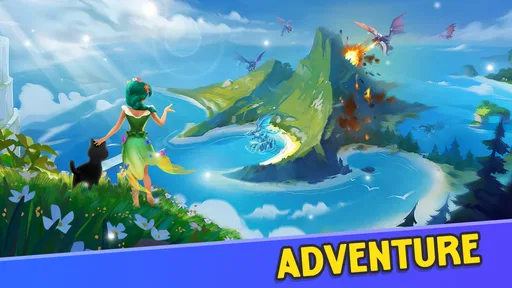

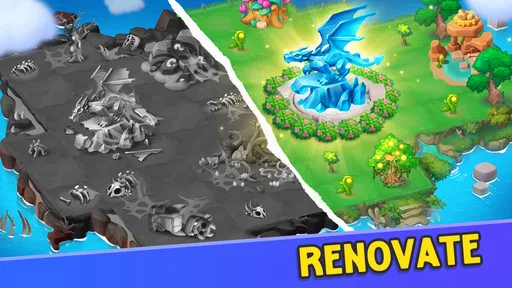


Our Review of Merge Neverland
 Analysis by Appyee
I spent time with Merge Neverland as a casual mobile game, and my first impression was that it is easiest to understand when treated as a relaxed sorting-and-combining activity rather than as a demanding adventure game. Its setting gives the familiar merge format an elf-world identity, while the free entry point makes it simple to try without committing money first. I found the experience most appealing in short sessions: open the game, look over the board, make a few deliberate combinations, and stop when my attention moved elsewhere.
The game is made by IVYGAMES and is available for players rated Everyone. It has reached over a million installs and holds a 4.5 average from around sixteen thousand ratings, which suggests that the basic loop has found a sizeable audience. Those figures are useful context, but they do not replace personal fit. A player who enjoys calm collection and board organization may settle into it quickly, while someone looking for fast reactions, deep character control, or a competitive match format will probably find the pace too gentle.
How clearly the board communicates what to do
The central idea is approachable: place matching objects together and build toward something more useful or more advanced. I did not need a long explanation to understand the purpose of merging. That simplicity is important for a casual game because the first few minutes should feel inviting, not like homework. The elf presentation also helps give the activity a sense of place instead of making it feel like a completely abstract puzzle.
Readability depends less on complicated rules than on how much is happening on the screen at once. When the board is relatively open, it is easy to scan for matching pieces and decide what deserves attention. As the collection grows, the challenge becomes organizational. I had to pause and inspect the available objects rather than moving everything immediately. That is a useful distinction: the game can be mentally quiet, but it is not always visually effortless.
I recommend approaching each session with a small plan. Instead of merging the first available pair, I found it better to look across the whole board, identify clusters that could become valuable, and leave room for future combinations. This habit reduces accidental clutter and makes the board easier to read. It is one of the more meaningful skills in the game, because progress is not only about tapping quickly; it is also about preserving useful space.
The navigation feels most comfortable for players who already understand common mobile-game conventions. Menus, rewards, and progression prompts belong to a familiar casual-game language. Even so, a new player may need a little time to learn which areas deserve immediate attention and which can wait. I would not describe the experience as difficult to enter, but I would describe it as easier after a few sessions, once the visual priorities become familiar.
Text size and visual contrast matter here because the board uses small objects and several kinds of information can compete for attention. I could follow the main activity without treating the game like a reading-heavy title, but people who need large text or very strong separation between similar colors should judge the screen on their own device. The game’s appeal comes partly from recognizing related items, so reduced color perception or visual fatigue may make that task more demanding than the rules themselves.
Why the merge loop works for short attention windows
One strength is that the basic activity can be broken into small decisions. I can make one combination, review the result, and decide whether to continue. That structure suits a commute, a waiting room, or a quiet break when I want something more engaging than scrolling but less intense than an action game. It also gives players who tire quickly from long sessions a natural stopping point.
There is a trade-off, however. A board-based merge game can create a feeling that every item deserves careful thought. If I am already mentally tired, choosing between several possible combinations can become less relaxing. The game is calm in tempo, but calm does not always mean effortless. Players who prefer completely passive entertainment may enjoy a simple video more, while players who like gentle problem-solving will probably appreciate the small decisions.
A practical routine helped me: I first cleared obvious matches, then checked whether the remaining pieces could support a larger chain before spending space on minor combinations. This is not a flashy technique, but it prevents the common mistake of filling the board with low-value clutter. It also gives the game a more strategic texture without turning it into a complex strategy title.
Playing comfortably across different abilities and situations
From a motor perspective, the game appears more forgiving than titles that demand rapid swipes, precise timing, or repeated button presses. The merge format favors deliberate interaction. I could take a moment before moving an item, which makes it friendlier for players who prefer slower touch input or who find fast gestures uncomfortable. That does not mean every interaction will suit every player, but the core decision-making is not built around reflex speed.
The main physical concern is precision. Small board objects can require careful selection, and a crowded layout may make it harder to distinguish the intended target. Players with tremors, limited reach, or difficulty with fine touch control may find that the game becomes less comfortable as the board gets busier. I would suggest using the largest practical screen, keeping the device steady, and playing in short sessions rather than forcing a long stretch of repeated dragging.
For one-handed use, the experience will depend on how the current board and controls are arranged on the phone. I found that a larger device can improve visibility but may make distant areas harder to reach with one thumb. A smaller device can be easier to hold but may compress the visual field. That is an important trade-off for anyone choosing between a phone and a tablet: more room can improve recognition, while reach and weight can become the new inconvenience.
Sensory comfort is similarly mixed. The fantasy theme makes the presentation more inviting, but players who are sensitive to busy visual scenes may want to avoid playing when the board is crowded or when they are already overstimulated. I would also be cautious about using it in situations where attention must remain available for the surroundings. A merge board encourages concentration, even though it does not require rapid reactions.
Sound is not central to understanding the merge task in the way it would be in a rhythm or audio-cue game. That makes the title more workable for someone who prefers a quiet environment or cannot rely on sound. I still recommend checking the game personally with the device’s audio settings, because the overall comfort of any mobile game depends on how its visual feedback and touch response feel in practice. The important point is that the core puzzle idea is communicated visually rather than through a need to listen continuously.
When the game fits real daily routines
My most natural use case was a ten-minute break after finishing a task. I could open the game, make a few merges, and leave without needing to remember a complicated control scheme. It also works for a player who wants a low-pressure evening activity, provided that organizing the board feels relaxing rather than demanding. The game is less suitable when I need something I can play without looking at the screen, because the value of each move depends on seeing relationships between objects.
It can also suit households where different people have different gaming preferences. Someone who dislikes combat may still enjoy the elf setting and collection loop, while a more experienced player can think about space management and longer chains. I would not call it a universal family game, though. The Everyone rating makes it broadly age-appropriate, but younger players may still need help understanding why saving space and planning combinations matters.
The free price lowers the risk of trying it, but free-to-play design can affect how comfortable a player feels over time. In-app purchases range from $0.99 to $99.99 per item, so I would treat spending controls as part of the setup, especially on a shared device. I enjoyed the game more when I viewed purchases as optional rather than as a way to solve every moment of friction. Anyone who dislikes prompts, resource limits, or the temptation to accelerate progress should decide on a firm spending boundary before playing.
This is also where the game differs from a completely offline puzzle or a paid premium title. A traditional one-time purchase may offer a more predictable experience, while a simple free puzzle may provide fewer collection layers and less world-building. Merge Neverland sits between those choices: it offers an accessible starting point and a themed progression loop, but the broader free-to-play structure may ask for more patience and self-control than a minimalist puzzle.
Where it stands beside other casual merge games
Compared with a plain matching game, the elf-world presentation gives the activity a stronger sense of identity. I am not only clearing identical pieces; I am also watching a themed space develop around those decisions. That makes the game more appealing when atmosphere matters. On the other hand, players who want a pure logic challenge may see the fantasy layer as decoration around a familiar mechanic.
Compared with fast casual games, its advantage is the slower pace. I do not need to win through reflexes, and I can think before committing to a move. Its weakness is that the experience may feel repetitive if the player does not enjoy gradual collection and board upkeep. It is also not the right substitute for a competitive game, because its appeal comes from personal progress and organization rather than direct pressure from another player.
Compared with a large role-playing game, this is much easier to pick up for a few minutes. I do not need to learn a complicated combat system or follow a long plot before the basic activity becomes enjoyable. The compromise is depth: players seeking extensive character builds, tactical battles, or a story that drives every session should look elsewhere. The elf theme adds charm, but it does not transform the game into a full-scale adventure.
Remaining friction before you commit
The biggest barrier is board management. The more objects I accumulated, the more important it became to avoid careless placement. That can be satisfying for organized players, but frustrating for anyone who wants constant forward motion. A useful rule is to keep a visible area for likely future combinations and avoid filling every open space just because an item is available.
Another limitation is the possibility of decision fatigue. When several moves look reasonable, I sometimes spent more energy comparing them than I expected from a casual game. The solution is not to optimize every turn. I found the experience more enjoyable when I accepted a good move instead of searching endlessly for the perfect one. Players who turn every puzzle into a maximum-efficiency exercise may find the relaxed label misleading.
Device context matters as well. On a phone with a compact display, small objects and crowded areas may be harder to inspect. On a larger device, visibility can improve while portability decreases. People who rely on magnification, altered touch settings, or other personal device adjustments should test how those changes affect dragging and object recognition before investing much time.
The current version is 2.2.9, and the game requires Android 7.0 or later. That makes the compatibility question straightforward for Android users: check the operating system before expecting to install it. For iOS players, I would still confirm compatibility in the relevant store before downloading, since device support can vary by platform. In either case, the practical test is whether the screen remains comfortable and responsive for your own hands and eyes.
I would also skip this game if you want a completely distraction-free experience with no purchase temptation, or if you need a game that can be played entirely through sound. It is a better choice for someone who likes visible progress, gentle planning, and a decorative fantasy setting. If your priority is accessibility through large, high-contrast controls or extensive customization, you should test the interface carefully rather than assuming that a simple rule set guarantees an easy experience.
My inclusive verdict
My overall view is positive, with clear limits. Merge Neverland makes a familiar casual mechanic approachable through a friendly elf setting and a slow, deliberate rhythm. I especially liked that it can fit into short breaks and does not depend on rapid reactions. The ability to pause and think gives it a wider practical audience than many reflex-based mobile games.
Its inclusive value comes mainly from the nature of the activity, not from a promise that every player will find the interface effortless. People who prefer slower touch input, visual decision-making, and flexible session length may find a good match. People with visual fatigue, fine-motor difficulty, or strong sensitivity to crowded screens should be more cautious, because board density and object recognition can become real obstacles.
The best way to approach it is to play deliberately: use a comfortable screen, keep the board organized, stop before concentration turns into strain, and set purchase limits before the game has a chance to influence that decision. Those habits make the experience more manageable and reveal its strongest quality: it gives small moments of progress without demanding the intensity of a traditional action game.
For me, this is a worthwhile free casual game for players who enjoy merging, collecting, and arranging a fantasy-themed board. It is not the ideal choice for everyone, and I would choose a simpler premium puzzle for a quieter, more predictable experience. Still, if the idea of building an elf-world through careful combinations sounds appealing, IVYGAMES’ game is easy to try and offers enough structure to make short everyday sessions feel purposeful.
Verdict
Strengths of Merge Neverland
- Relaxing merge gameplay that is easy to learn and play at your own pace.
- Beautiful fantasy visuals and charming creature designs.
- Many collectible items and creatures provide satisfying progression.
- Regular events add variety and offer extra rewards.
- Playable offline for convenient gaming without a constant connection.
Limitations of Merge Neverland
- Energy limits can slow progress during longer play sessions.
- Some upgrades and items require substantial grinding to obtain.
- Frequent offers and ads may feel intrusive to some players.
- Later levels can become repetitive once the core mechanics are familiar.
- Limited inventory space can make item management frustrating.
Other Releases by IVYGAMES
View All
Magicabin: Witch's Adventure
Simulation4.8
Similar Picks in This Category
View All
My Talking Angela
Outfit7 Limited4.2

My Talking Tom
Outfit7 Limited4.3

Pou
Zakeh4.2

My Talking Tom 2: Pet Game
Outfit7 Limited4.3

Candy Crush Saga
King4.6

Bridge Race
Supersonic Studios LTD4.1
Frequently Asked Questions
What is Merge Neverland about?
Merge Neverland is a casual merge-and-adventure game set in a magical fantasy world. You combine matching objects to create upgraded items, complete tasks, unlock new areas, and help charming characters restore and develop the land. Its gameplay is designed for relaxed, short sessions, although progression gradually introduces more objectives, resources, and strategic decisions.
How does the merging system work in Merge Neverland?
The main mechanic is based on combining three or more identical objects to produce a higher-level item. These items can often be merged again, creating a chain of upgrades that supports quests and world development. Planning is important because the board has limited space, so merging everything immediately is not always the best choice. Keeping useful objects organized can make later objectives easier.
Can Merge Neverland be played without spending money?
Yes, Merge Neverland can generally be played without making purchases. The game offers progression through regular merging, missions, rewards, and timed activities. However, optional in-app purchases may provide extra energy, premium currency, boosters, or faster progress. Players who prefer not to spend should expect to manage energy carefully and sometimes wait for it to refill before continuing.
Does Merge Neverland require an internet connection?
An internet connection may be needed for several features, including loading events, synchronizing progress, receiving updates, displaying advertisements, and processing in-app purchases. Some basic gameplay may work temporarily while offline, but the experience can be limited and progress may not synchronize until the device reconnects. For the most reliable performance, playing with a stable connection is recommended.
Is Merge Neverland suitable for children?
Merge Neverland is easy to understand and uses colorful visuals, simple touch controls, and fantasy-themed content, making it accessible to many younger players. Nevertheless, parents should review the app’s age rating and device settings because the game may include advertisements, optional purchases, and event-based mechanics. Enabling purchase restrictions is advisable if children will play without supervision.
Play our best games!


